
The war in Ukraine has fundamentally changed how military planners, governments, and defense industries view modern warfare. Before 2022, many Western nations assumed that future conflicts would be relatively short, technology-driven, and dominated by precision-guided weapons. The reality emerging from the battlefields of Ukraine has been very different. The conflict has demonstrated that large-scale conventional warfare remains possible and that industrial capacity remains one of the most decisive factors in military success.
Perhaps no lesson has been more significant than the ammunition challenge. The extraordinary consumption of artillery shells, rockets, missiles, and air defense interceptors has exposed vulnerabilities in Western defense manufacturing and highlighted the importance of military industrial capacity. The conflict has revealed that advanced weapon systems alone are insufficient if nations cannot sustain production during prolonged combat operations.
For NATO, the United States, and European defense industries, the Ukraine war has become a wake-up call. It has forced a reassessment of stockpile requirements, procurement strategies, production capacity, and industrial resilience. The strategic implications extend far beyond Ukraine and will influence defense planning for years to come.
The Return of Industrial Warfare
For much of the post-Cold War era, Western defense planning focused on efficiency, technological superiority, and expeditionary operations. Military campaigns in Afghanistan, Iraq, and other theaters involved relatively limited ammunition expenditure compared to large-scale interstate warfare.
The Ukraine conflict shattered these assumptions. Artillery duels involving thousands of rounds per day became commonplace. Both Ukrainian and Russian forces consumed ammunition at rates that exceeded the expectations of many Western analysts. High-intensity warfare proved to be an industrial contest as much as a battlefield contest.
This reality has revived the concept of industrial warfare. Victory depends not only on operational skill and technological advantage but also on the ability to replace losses, replenish stockpiles, and sustain combat operations over extended periods.
Military history repeatedly demonstrates this principle. The First World War, the Second World War, and the Cold War all highlighted the relationship between industrial capacity and military effectiveness. The Ukraine war has reinforced this lesson for the twenty-first century.
The Artillery Shell Production Problem
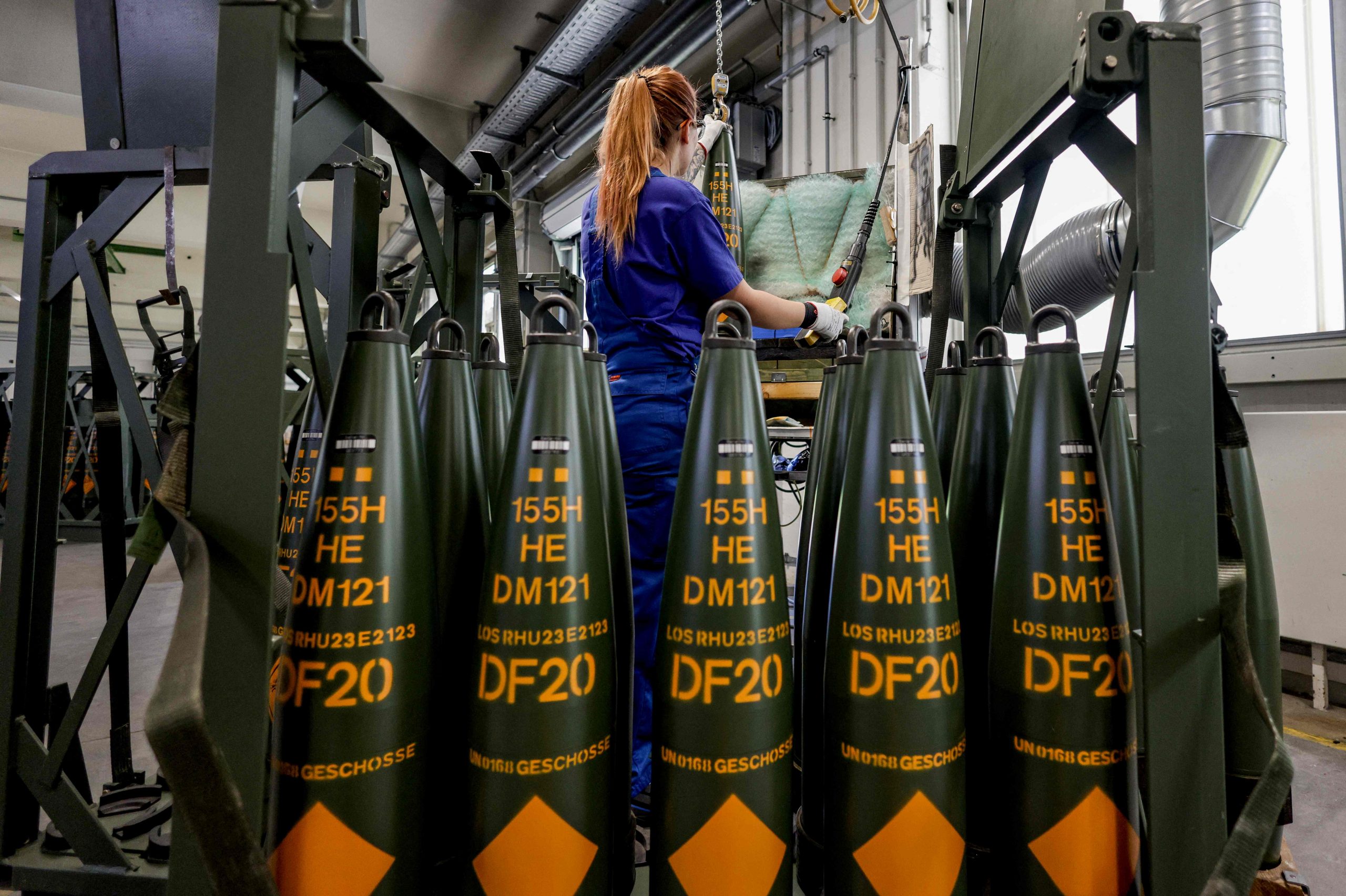
Artillery has emerged as one of the defining weapons of the conflict. Despite the proliferation of drones, precision-guided munitions, and advanced surveillance systems, conventional artillery remains essential for suppressing enemy positions, supporting maneuver forces, and shaping battlefield conditions.
The challenge lies in the scale of ammunition consumption. Modern artillery systems are highly effective, but they require a continuous flow of shells. During periods of intense fighting, daily expenditure can reach levels that rapidly deplete stockpiles.
Many NATO countries discovered that their artillery shell production capacity was designed for peacetime requirements rather than prolonged high-intensity conflict. Existing production lines often lacked the ability to rapidly increase output. In some cases, years of reduced procurement had weakened industrial infrastructure and discouraged investment.
The result was a significant gap between operational demand and industrial production. Governments were forced to increase orders, expand manufacturing facilities, and invest in workforce development programs to address these shortages.
Defense Manufacturing Under Pressure
The ammunition challenge is part of a broader issue affecting defense manufacturing. Modern weapons systems depend on complex supply chains involving thousands of suppliers and specialized components. Production cannot be increased overnight.
Defense manufacturers face several constraints. Expanding output requires new facilities, skilled labor, long-term contracts, raw materials, specialized machinery, and regulatory approvals. These factors create delays even when political leaders prioritize increased production.
In addition, many defense industries had optimized their operations for efficiency rather than surge capacity. Production lines were designed to meet predictable peacetime demand rather than the requirements of major conflict.
The Ukraine war exposed the limitations of this approach. Governments quickly realized that rebuilding industrial capacity is far more difficult than reducing it. Once production lines are closed and skilled workers leave the industry, restoring capacity requires significant investment and time.
This realization is driving a new focus on industrial resilience across NATO and allied defense sectors.
The Strategic Importance of Military Industrial Capacity
Military industrial capacity has become a strategic asset comparable to armed forces themselves. A nation may possess advanced tanks, aircraft, missiles, and naval vessels, but these systems can only remain effective if they can be maintained, repaired, and replenished.
The concept of military readiness must therefore extend beyond deployed forces. It includes factories, supply chains, research facilities, logistics networks, and workforce capabilities. Together, these elements form the foundation of sustained military power.
For strategic competitors such as Russia and China, industrial capacity has long been viewed as an integral component of national security. The Ukraine conflict has encouraged Western governments to adopt a similar perspective.
Defense production is increasingly being treated as a long-term strategic capability rather than simply an economic activity. Investments in manufacturing infrastructure are now seen as investments in deterrence.
NATO’s Response to the Production Challenge
NATO members have responded to the ammunition challenge by launching initiatives aimed at increasing production and strengthening defense industrial cooperation. Governments have signed multi-year procurement agreements, expanded ammunition contracts, and encouraged defense companies to invest in new facilities.
The alliance has also recognized the importance of harmonization. Standardized ammunition types, shared procurement frameworks, and coordinated industrial planning can improve efficiency and reduce bottlenecks.
Several European countries have announced plans to significantly increase artillery shell production. The United States has also invested heavily in expanding manufacturing capacity for critical munitions. These efforts are intended not only to support Ukraine but also to rebuild national stockpiles and improve long-term readiness.
However, increasing production is not simply a matter of funding. Supply chains for explosives, propellants, metals, and specialized components must also be strengthened. Every stage of the production process requires attention.
The Supply Chain Dimension
Ammunition production depends on a resilient defense supply chain. Components such as steel, chemicals, explosives, electronic systems, and packaging materials must be available in sufficient quantities. Disruptions at any point can affect overall output.
The Ukraine war highlighted vulnerabilities in global supply chains. Transportation delays, energy costs, labor shortages, and dependence on foreign suppliers all created challenges for defense manufacturers.
Governments are increasingly seeking to diversify supply sources, reduce strategic dependencies, and strengthen domestic production capabilities. These efforts align with broader discussions regarding defense supply chain security and strategic autonomy.
Industrial resilience is now recognized as a key component of military resilience. The ability to sustain production under pressure may determine operational effectiveness during future crises.
Lessons for Future Warfare
The ammunition challenge has broader implications for future warfare. High-technology systems remain essential, but they cannot replace industrial capacity. Precision-guided munitions, advanced drones, artificial intelligence, and networked command systems all depend on reliable manufacturing and logistics support.
Future conflicts involving major powers could generate demand for ammunition and military equipment on an even larger scale. The Indo-Pacific, for example, presents unique logistical challenges due to its vast distances and maritime geography.
Military planners must therefore prepare for scenarios involving prolonged competition and sustained production requirements. Stockpile management, industrial planning, and logistics resilience will become increasingly important elements of defense strategy.
The ability to produce at scale may become one of the defining characteristics of military power in the coming decades.
The Balance Between Efficiency and Resilience
The central lesson of the Ukraine war is not that efficiency is unimportant. Rather, it is that efficiency must be balanced with resilience. Defense industries require sufficient flexibility to respond to unexpected demand without sacrificing competitiveness during peacetime.
This balance is challenging. Maintaining excess capacity can be expensive. Yet insufficient capacity creates strategic risk. Governments and industry must therefore develop new models that support both economic sustainability and national security requirements.
Long-term procurement commitments, public-private partnerships, workforce development programs, and investment in advanced manufacturing technologies may help achieve this balance.
The objective is not simply higher production. It is the creation of industrial systems capable of adapting rapidly to changing security conditions.
Conclusion
The Ukraine war has revealed a fundamental truth about modern warfare: industrial capacity remains a decisive element of military power. The extraordinary demand for ammunition has exposed weaknesses in Western defense manufacturing and highlighted the importance of military industrial capacity.
Artillery shell production, munitions stockpiles, defense supply chains, and manufacturing resilience are no longer technical issues confined to procurement specialists. They are strategic issues that influence deterrence, readiness, and national security.
NATO and allied governments are responding with investments in production capacity, industrial cooperation, and supply chain security. These efforts represent a recognition that future military effectiveness depends not only on advanced technologies but also on the ability to sustain them.
The ammunition challenge is therefore more than a wartime logistics issue. It is a strategic warning about the realities of modern conflict. Nations that can build resilient, scalable, and adaptable defense manufacturing systems will be better prepared for the security challenges of the future.
Key Takeaways
- The Ukraine war demonstrated that industrial capacity remains a decisive factor in modern warfare.
- Artillery shell production has become a major challenge for NATO and Western defense industries.
- Military industrial capacity is increasingly viewed as a strategic asset supporting deterrence and readiness.
- Defense manufacturing requires resilient supply chains, skilled labor, and long-term investment.
- Future military effectiveness will depend on the ability to sustain production during prolonged conflicts.
Leave a Comment