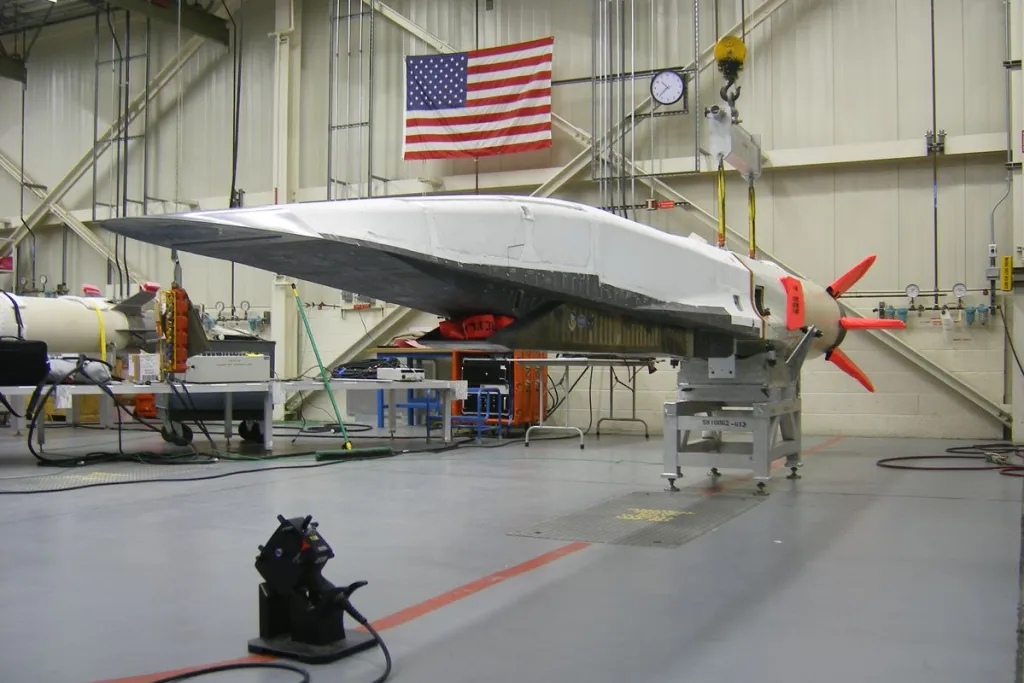

The hypersonic weapons race has become one of the defining indicators of military modernization in the twenty-first century. For the United States and Russia, hypersonic missiles are not merely advanced weapons systems; they are instruments of deterrence, strategic signaling, and operational disruption. In 2026, the comparison between U.S. and Russian hypersonic capabilities reveals a fundamental asymmetry: Russia moved earlier toward operational deployment, while the United States is now accelerating a broader and more technologically diversified modernization effort.
This gap does not mean that Russia possesses overall military superiority. It does mean, however, that Moscow has succeeded in fielding and using several hypersonic systems before Washington has completed large-scale operational deployment of its own. The result is a strategic challenge for the United States, NATO, and allied missile defense planners.
The central question is not simply which country has the fastest missile. The more important issue is which side can integrate hypersonic weapons into doctrine, production, targeting networks, and deterrence strategy. In that respect, Russia currently holds an operational lead, while the United States retains significant long-term potential.
Why Russia Became Operational First
Russia’s early progress in hypersonic weapons was shaped by strategic necessity, political signaling, and long-standing missile expertise. After the Cold War, Moscow lacked the economic capacity to compete with the United States across the full spectrum of conventional military power. Hypersonic weapons offered a way to offset U.S. advantages in missile defense, naval power, precision strike, and global force projection.
Russian military doctrine has long emphasized missiles as tools of strategic deterrence and escalation control. Rather than building a large portfolio of global expeditionary capabilities, Russia invested in systems designed to threaten high-value targets, penetrate defenses, and create uncertainty in Western planning.
President Vladimir Putin publicly emphasized hypersonic and exotic strategic weapons in 2018, presenting them as responses to U.S. missile defense developments and NATO military pressure. Since then, systems such as Avangard, Kinzhal, and Zircon have become central to Russia’s strategic messaging.
Russia also benefited from adapting existing missile technologies. The Kinzhal, for example, is widely assessed as an air-launched ballistic missile rather than a fully new hypersonic cruise missile. This allowed Moscow to field a system faster than would have been possible through an entirely new development path.
Russia’s Hypersonic Arsenal in 2026
Russia’s hypersonic portfolio includes several systems with different missions. The Avangard hypersonic glide vehicle is designed for strategic delivery and is launched by an intercontinental ballistic missile. Its purpose is to penetrate missile defenses and strengthen Russia’s nuclear deterrent.
The Kinzhal is an air-launched weapon carried by aircraft such as the MiG-31K. Russia has used Kinzhal missiles in the war against Ukraine, giving Moscow operational experience with hypersonic-class weapons. However, battlefield use has also exposed limitations. Ukrainian air defenses have claimed interceptions of Kinzhal missiles, raising questions about Russian performance claims and the practical survivability of the system against advanced layered defenses.
The Zircon is Russia’s naval hypersonic cruise missile, intended for launch from surface vessels and submarines. It is designed to threaten ships and land targets, giving Russia a high-speed maritime strike option. Moscow has continued to test and display Zircon as part of its naval modernization narrative.
Russia has also promoted the Oreshnik intermediate-range missile as part of its expanding strike arsenal. Its reported use against Ukraine and potential deployment implications for Europe have increased concern among NATO planners.
Together, these systems give Russia a diverse hypersonic and quasi-hypersonic arsenal. The key strength is operational availability. The key weakness is uncertainty over production scale, reliability, accuracy, and the sustainability of Russia’s defense-industrial base under sanctions and wartime pressure.
America’s Delayed but Broader Hypersonic Modernization
The United States entered the hypersonic competition with major technological advantages but a slower path to operational fielding. For years, U.S. hypersonic research focused heavily on experimentation, testing, and long-term technology development rather than rapid deployment.
That approach has changed. By 2026, U.S. hypersonic modernization is centered on several major programs. The U.S. Army’s Long Range Hypersonic Weapon, known as Dark Eagle, is designed to provide a ground-launched conventional precision strike capability against time-sensitive and heavily defended targets. The system uses a Common Hypersonic Glide Body and is intended for deployment in contested theaters.
The U.S. Navy’s Conventional Prompt Strike program is closely related and aims to place hypersonic strike capability on naval platforms. This is strategically important because sea-based systems could provide survivable and flexible strike options, particularly in the Indo-Pacific and potentially in other theaters.
The U.S. Air Force is developing the Hypersonic Attack Cruise Missile, or HACM. Unlike boost-glide systems, HACM is intended as an air-launched hypersonic cruise missile. This gives the United States another operational path, especially for tactical and theater-level strike missions.
The U.S. approach is therefore broader than Russia’s in technological ambition. Washington is seeking land, sea, and air-launched hypersonic weapons, supported by advanced sensors, networked targeting, and eventually counter-hypersonic defenses.
The Industrial Base Challenge
The most important U.S. challenge is no longer basic research. It is production. Hypersonic weapons require advanced materials, thermal protection, precision manufacturing, propulsion systems, guidance technology, and specialized testing infrastructure. Moving from prototypes to operational inventories is difficult and expensive.
Recent U.S. contracts show that Washington is trying to transition from experimentation to production. The emphasis is increasingly on scaling the Common Hypersonic Glide Body, securing supply chains, and reducing development timelines.
Russia faces a different industrial problem. It has deployed systems earlier, but sanctions, component shortages, precision manufacturing limits, and wartime consumption create questions about long-term production capacity. Moscow can produce and use hypersonic weapons, but whether it can produce them at scale over time remains uncertain.
This creates an important distinction. Russia may have the first-mover operational advantage. The United States may have the stronger long-term industrial and technological base if it can overcome procurement delays and production bottlenecks.
Strategic Risks for NATO
Russian hypersonic weapons create several strategic risks for NATO. First, they compress decision-making timelines. Hypersonic and high-speed missile systems reduce the time available for detection, classification, political consultation, and military response.
Second, they threaten critical infrastructure. Air bases, command centers, ports, missile defense sites, logistics hubs, and headquarters could become priority targets in a crisis. Even limited attacks could disrupt NATO reinforcement operations on the eastern flank.
Third, hypersonic weapons complicate escalation management. Because some systems may be capable of carrying either conventional or nuclear warheads, ambiguity increases the risk of miscalculation. A launch detected in a crisis could be interpreted in multiple ways, creating dangerous pressure on decision-makers.
Fourth, Russian use of hypersonic systems in Ukraine demonstrates Moscow’s willingness to employ these weapons for battlefield, psychological, and strategic signaling purposes.
The Missile Defense Problem
Current missile defense architectures were not designed primarily for maneuvering hypersonic threats. Traditional systems are more effective against predictable ballistic trajectories. Hypersonic glide vehicles and high-speed maneuvering missiles present a more complex tracking and interception challenge.
The United States is investing in counter-hypersonic capabilities, including the Glide Phase Interceptor and space-based tracking systems. These capabilities are essential because intercepting a hypersonic weapon in its terminal phase leaves very little time for response.
For NATO, the defense challenge is especially difficult. Europe’s geography places many critical targets within range of Russian missiles. Defending against a mix of ballistic missiles, cruise missiles, drones, and hypersonic weapons will require layered defense, dispersal, hardening, deception, and offensive counterforce options.
No single interceptor system will solve the problem. The future of missile defense will depend on integrated sensors, rapid data sharing, artificial intelligence-assisted tracking, and resilient command networks.
Who Holds the Advantage in 2026?
In 2026, Russia holds the advantage in operational experience and early fielding. Avangard, Kinzhal, and Zircon give Moscow a visible hypersonic arsenal that supports strategic messaging and operational planning.
The United States holds the advantage in long-term modernization potential. Its programs are more diversified, its industrial base is deeper, and its alliance network provides broader deployment options. However, these advantages will only matter if U.S. programs move rapidly from testing to fielded inventories.
The hypersonic gap is therefore real, but it is not permanent. It is a timing gap, an operational deployment gap, and a production transition gap. The next several years will determine whether the United States can close it.
Conclusion
America’s hypersonic gap with Russia reflects different strategic choices. Russia prioritized early operational deployment to offset conventional disadvantages and strengthen deterrence messaging. The United States pursued a more deliberate technology pathway and is now accelerating toward fielded capabilities.
For NATO, the implications are immediate. Russian hypersonic weapons increase pressure on missile defense, command-and-control, and eastern flank reinforcement planning. They also heighten escalation risks by compressing decision timelines and introducing ambiguity into crisis scenarios.
The United States does not need to mirror Russia weapon for weapon. It needs credible, survivable, and scalable hypersonic capabilities integrated into a broader system of sensors, targeting, missile defense, and alliance strategy. If Washington can achieve that, the current gap may narrow significantly by the end of the decade.
In 2026, Russia may have moved first. But the long-term outcome of the hypersonic competition will depend on production capacity, operational integration, and the ability to manage strategic risk under extreme time pressure.
Key Takeaways
- Russia became operational earlier because hypersonic weapons fit its strategy of offsetting U.S. conventional and missile defense advantages.
- Russia’s key hypersonic systems include Avangard, Kinzhal, Zircon, and the increasingly discussed Oreshnik missile.
- The United States is catching up through Dark Eagle, Conventional Prompt Strike, and HACM.
- Production capacity and industrial scaling are now decisive factors in the hypersonic competition.
- NATO faces major strategic risks from compressed decision timelines, missile defense challenges, and escalation ambiguity.
Leave a Comment